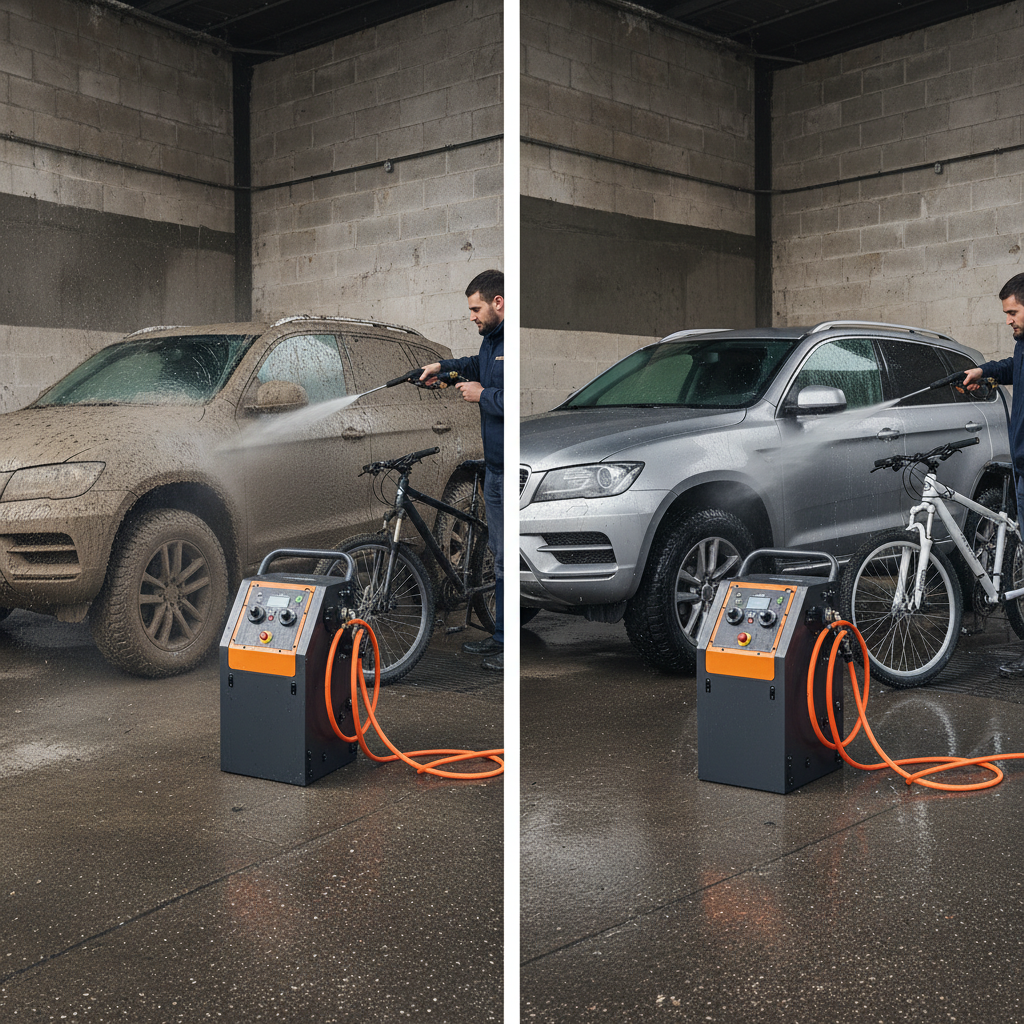
You know, these days everyone’s talking about ‘smart’ car washes, right? Automated everything, water recycling, fancy soaps… It’s a whole different world than it was even five years ago. I’ve been crawling around under these things for twenty years, and honestly, the speed of change is exhausting. But it's good, I guess. Keeps things interesting. People want convenience, they want eco-friendly, they want a spotless finish. That’s the pressure we’re under, to deliver all three.
The biggest thing I’ve noticed is everyone trying to over-engineer the brushes. They think softer is better, right? More gentle on the paint. But softer brushes wear out faster, they don't agitate as well, and you end up needing more soap to get the same clean. To be honest, finding the right balance between gentle and effective is a nightmare. It's a constant back-and-forth.
And don't even get me started on the water reclamation systems. They're supposed to save water, and they do, sort of. But the filters clog up constantly. Constantly! I spent a week last month at a factory in Qingdao dealing with a particularly stubborn algae bloom in one of those systems. Smelled like a swamp. Anyway, I think focusing on efficient water use is more important than just trying to recycle every drop.
The Current Landscape of Car Wash Manufacturers
Honestly, the car wash manufacturer scene is booming. There’s huge demand, especially in Asia and South America. It's not just about individual car owners either. Fleet washes – rental companies, delivery services – that’s where the real money is now. They need reliable, high-throughput systems. And they're less concerned about a few swirl marks than your average soccer mom.
You’ve got your big players, the established brands, churning out the high-volume, standardized stuff. Then you've got a lot of smaller manufacturers, mostly in China, focusing on customization and niche markets. Those guys are quick, flexible, and willing to take risks. But quality control can be… variable. Let's just say I've seen some things.
Common Pitfalls in Car Wash Manufacturing Design
Have you noticed how many manufacturers try to cram too much technology into a single machine? Too many sensors, too many automated features… it just complicates things. More points of failure. More headaches for the maintenance guys. Strangely enough, simplicity often wins. A well-designed, robust system with fewer moving parts is almost always more reliable.
Another thing is neglecting the human factor. Designers sit in their offices and think about the ideal user experience, but they don’t spend eight hours a day crawling around in the mud fixing broken machines. Easy access for maintenance is critical. And everything needs to be clearly labeled. I encountered this at a factory in Germany last time. The engineering team had designed this amazing system, but you needed a contortionist to reach the main filter.
And don't get me started on the soap dispensers. They always leak. Always! It’s a universal law.
Materials and Their Real-World Characteristics
The brushes, obviously, are huge. Nylon, polypropylene, those are the standards. But the quality varies wildly. Cheap nylon feels brittle, almost plastic-y. Good nylon has a bit of give, a bit of flex. It smells…cleaner, I guess. It’s a weird thing to describe. And the stainless steel in the conveyor systems? It has to be 316L. Anything less will rust in a heartbeat, especially near the coast.
The pump seals… now those are a pain. They’re usually made of Viton or EPDM rubber. Viton’s more resistant to chemicals, but it’s also more expensive. EPDM’s cheaper, but it wears out faster. You have to consider the type of soap the car wash is going to use. Some soaps are really aggressive. You know, the ones with all the waxes and polymers.
And the plastic panels? They need to be UV resistant. Otherwise, they’ll become brittle and crack within a year. I've seen so many car washes with faded, cracked panels. It looks terrible. It's a sign of neglect, frankly.
Rigorous Testing: Beyond the Lab
Lab tests are fine, I guess. But they don’t tell you everything. You need to see how these things perform in the real world. We send prototypes to actual car washes, run them through thousands of cycles, and break them. Intentionally. I mean, we have to see where they fail.
We also do a lot of environmental testing. Freeze-thaw cycles, salt spray, UV exposure… We basically try to simulate years of abuse in a matter of weeks. And we pay attention to the little things. How easy is it to clean the machine? How long does it take to replace a worn-out part? Those things matter.
Car Wash Component Reliability Ratings
How Users Actually Interact with Car Wash Systems
You’d think people would follow the instructions, right? “Pull up slowly”, “Keep your windows rolled up”… Nope. They speed through, they leave their antennas up, they try to wash their motorcycles. We have to design for stupidity. Seriously.
And they abuse the pay stations. Smash the buttons, try to pry open the cash boxes… It’s unbelievable. Anyway, I think designing for real-world usage is just as important as designing for performance.
Advantages, Disadvantages, and Customization Options
The big advantage of modern car wash manufacturers is efficiency. You can wash a lot of cars quickly and with relatively little labor. That's a huge cost saving. But the initial investment is significant. And you’re relying on complex machinery, which means things will break down eventually.
Customization? Absolutely. We had a customer last year who wanted to integrate a tire shine applicator that used a specific, organic formula. It wasn’t easy, but we managed to make it work. We had to modify the entire spray system. It’s a pain, but it’s what sets us apart.
A Real-World Customer Story
Last month, that small boss in Shenzhen who makes smart home devices insisted on changing the interface to , and the result was a week of troubleshooting. He wanted it to “look more modern.” Modern! On a car wash! Turns out, the connector couldn’t handle the voltage and kept overheating. We ended up having to switch back to the standard connector, costing him time and money. He was not happy.
He learned a lesson though. Sometimes, sticking with what works is the best approach. And I learned that some customers will always prioritize aesthetics over functionality.
Anyway, I think that's a pretty good example of what we deal with day to day.
Summary of Key System Components and Performance Metrics
| Component |
Material |
Typical Lifespan (Cycles) |
Maintenance Frequency |
| Brush Motors |
Cast Iron, Copper Windings |
500,000 - 750,000 |
Annual Inspection & Lubrication |
| Pump Seals |
Viton/EPDM Rubber |
100,000 - 200,000 |
Quarterly Replacement |
| Conveyor Belts |
Reinforced PVC |
300,000 - 500,000 |
Semi-Annual Inspection |
| Water Reclamation Filters |
Polypropylene |
50,000 - 100,000 |
Weekly Cleaning/Replacement |
| Control Systems |
Industrial PLC |
1,000,000+ |
Annual Software Updates |
| Soap Dispensing Nozzles |
Stainless Steel/Plastic |
75,000 – 150,000 |
Monthly Inspection |
FAQS
Ignoring small problems. They wait until something completely breaks down instead of addressing minor issues proactively. A leaky seal, a squeaky belt… those are early warning signs. If you ignore them, you’ll end up with a major repair bill down the line. It’s like ignoring a check engine light in your car – it's going to get worse.
Critically important. Hard water leaves spots and streaks, and it can clog up the nozzles and filters. You need a water softener, and you need to maintain it properly. I've seen car washes shut down completely because of hard water issues. It's not glamorous, but it's essential.
Depends on the quality of the brush, the type of soap used, and the volume of cars washed. But generally, you're looking at 6 months to a year for a good quality brush. You'll notice it when the bristles start to bend and lose their shape. And the cars will start coming out looking less clean.
Definitely. There’s a lot of research going into more durable and environmentally friendly materials. Self-healing polymers are showing promise for conveyor belts and brushes. And there’s a push to use more recycled plastics in the construction of the machines themselves. It’s slow going, but it’s happening.
Huge factor. If you’re in a cold climate, you need to worry about freezing pipes and corrosion from road salt. In a hot, dry climate, you need to worry about UV degradation and water evaporation. You need to choose materials and components that can withstand the local conditions. It’s not one-size-fits-all.
Definitely the move towards more data-driven operation. Sensors are collecting all sorts of information – water usage, soap consumption, car counts, wash cycle times. And that data is being used to optimize performance and reduce costs. It's still early days, but it’s going to change the industry.
Conclusion
So, there you have it. The car wash industry is complex, constantly evolving, and full of hidden pitfalls. From materials selection to system design to maintenance procedures, there’s a lot to consider. It's not just about building a machine that washes cars; it's about building a machine that washes cars reliably, efficiently, and cost-effectively, even under the harshest conditions.
Ultimately, whether this thing works or not, the worker will know the moment he tightens the screw. And if he’s cursing under his breath, we’ve failed. That’s the bottom line. If you are looking for a reliable car wash manufacturer, visit our website.