Understanding the car wash machine price in china is essential for entrepreneurs looking to enter the automated vehicle cleaning market. China has become a global hub for manufacturing high-efficiency tunnel and reciprocating washers, offering a balance between advanced PLC-driven technology and competitive capital expenditure. The pricing varies significantly based on the level of automation, brush materials, and integrated drying systems.
For many operators, the primary challenge is navigating the trade-off between low initial acquisition costs and long-term operational reliability. Choosing a machine that utilizes national standard galvanized profiles and CNC machining ensures that the equipment withstands the corrosive environment of soaps and water, reducing the total cost of ownership over the machine's lifecycle.
This guide provides a detailed analysis of the current pricing landscape in China, breaking down the technical specifications of tunnel-type systems and the factors that influence final quotes. By the end of this article, procurement teams will have a clear framework for evaluating Chinese suppliers and selecting equipment that optimizes ROI.

1Market Overview of Automated Washing Equipment

The manufacturing sector for specialized environmental equipment in China has evolved rapidly, leading to highly standardized production of automatic car washers. The market is characterized by a shift toward "Intelligent Profiling" systems that can detect vehicle dimensions in real-time. This technological leap allows machines to cater to various vehicle types, from compact cars to 7-seater SUVs, without risking body damage.
Most high-end Chinese exports now utilize powder-sprayed high-temperature melting paint and galvanized iron plates, which are the industry standard for preventing rust. This structural integrity is a key driver of the value proposition when comparing the car wash machine price in china against European or American counterparts.
Suppliers like Xingtai Dingyuan leverage large-scale production bases to lower costs while maintaining strict adherence to IEC and CCC standards. This enables the delivery of complex tunnel systems that integrate brushing, foaming, and drying into a single, seamless automated process.
2Technical Architecture and Key Features
At the core of modern Chinese automated washers is the PLC (Programmable Logic Controller) system, often sourced from brands like Xinjie. This control center manages everything from the conveyor speed to the timing of the foam spraying. The integration of infrared sensors allows for "automatic recognition," meaning the machine adapts its brush distance based on the actual width and height of the vehicle.
The brushing system typically employs a combination of a top brush, four skirt brushes for side cleaning, and large vertical brushes for the front and rear. The use of soft foam cotton brushes is a critical feature, as these are designed to be scratch-free and can sustain between 200,000 to 300,000 wash cycles.
Additionally, the inclusion of high-power fans (e.g., 4 groups of 4kW motors) ensures rapid drying. The electrical components, including air switches and contactors from brands like Delixi or Chint, are selected to ensure low failure rates and stable performance under continuous industrial load.
3Operational Workflow and Application Scenarios
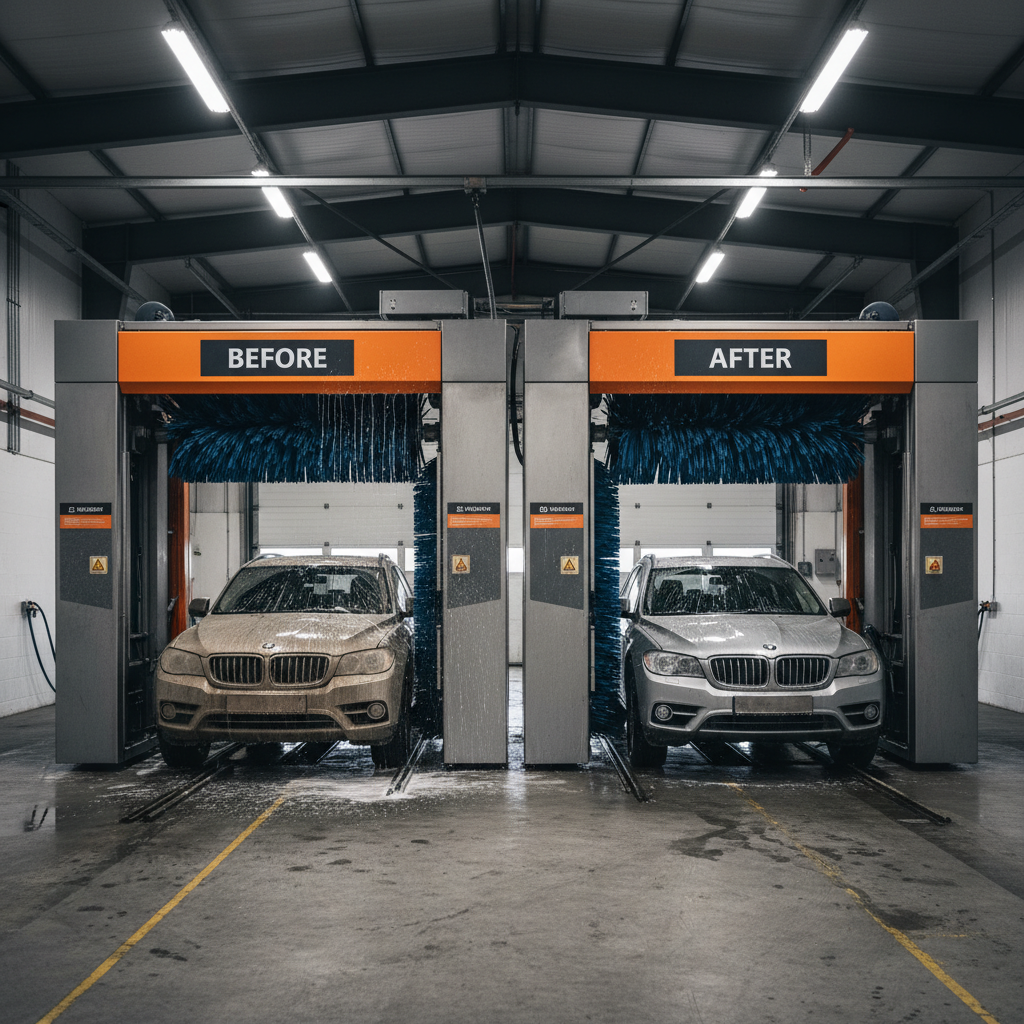
The process begins with the entrance tire guidance function, where high-quality nylon rollers align the vehicle onto the trailer track. Once detected by photoelectric sensors, the vehicle moves slowly through a series of stages: initial water spray, foam application, multi-directional brushing, and finally, high-pressure air drying. This entire cycle typically takes around 120 seconds per vehicle.
These machines are ideally suited for high-volume commercial car washes, fleet management centers, and dealership service bays. The tunnel-type configuration is particularly effective for businesses aiming to maximize throughput without sacrificing cleaning quality.
The human-machine interface (HMI) touch screen allows operators to switch between automatic and manual modes, providing flexibility for special cleaning requirements or emergency troubleshooting via a built-in fault detection and alarm system.
4Performance Analysis and Resource Efficiency
Efficiency in automated washing is measured by the ratio of water consumption to vehicle throughput. A standard tunnel machine typically uses 100L-150L of water per car. When comparing the car wash machine price in china to its performance, the integration of PLC-controlled spraying minimizes waste by applying chemicals only where needed.
The power consumption of these systems is relatively optimized, with a total power requirement around 28KW for a full tunnel setup. The use of waterproof reducing motors and stainless steel fittings ensures that the mechanical energy is transferred efficiently without excessive friction loss.
car wash machine price in china Performance Metrics
As shown in the metrics, Chinese systems often provide a lower setup cost and shorter cycle times compared to general industry averages, making them highly attractive for rapid ROI. However, the reliance on high-pressure pneumatic systems (0.8Mpa) requires a stable air compressor infrastructure on-site.
5Procurement Factors and Cost Breakdown
When analyzing the car wash machine price in china, buyers must look beyond the base machine cost. A complete installation typically includes the tunnel washer, tempered glass partitions, water pumps, air pumps, and the traveling rail system. Shipping costs (CIF) can vary significantly based on the destination port, such as Puerto Cortes.
Customization options, such as adding a wastewater recovery system or upgrading the brush material, can add several thousand dollars to the final price. Payment terms are usually structured as a 50% deposit and 50% before delivery, with a typical lead time of 45 working days.
Warranty periods for these machines typically range from 12 to 18 months after installation. It is advisable to purchase a set of spare bearings and sensors upfront to avoid downtime caused by international shipping delays for small parts.
6Maintenance Requirements and Life Cycle
To maintain the 18-month warranty and ensure a long operational life, regular lubrication of the trailer chain and nylon rollers is mandatory. The use of carbon steel hardness ball chains reduces friction, but they still require periodic inspection for wear and tear to prevent track jams.
The electrical control box is designed for waterproofing and anti-corrosion, but it must be kept free of dust and moisture. Monthly checks of the proximity sensors and infrared radiation sensors are necessary to ensure the vehicle profiling system remains accurate.
The life cycle of the machine is largely determined by the quality of the galvanized structure. By utilizing powder-sprayed high-temperature paint, these machines can operate in humid environments for several years before requiring a structural refurbishment.
7Comparative Selection Guide for Operators
Choosing between different automated systems requires a balance of throughput needs and budget. A tunnel machine is best for high-volume sites, while a reciprocating washer may be more suitable for limited space. The following table compares common configurations found in the Chinese market.
When evaluating the car wash machine price in china, consider the total cost of ownership, including water, electricity, and labor for manual finishing (such as interior cleaning).
| System Type | Throughput | Investment Level | Best Use Case |
|---|---|---|---|
| Tunnel Automatic | High (120s/car) | High | Commercial Wash Centers |
| Reciprocating | Medium | Medium | Dealerships/Gas Stations |
| Contactless | Medium | Medium-High | Premium Paint Care |
| Bus Washer | Low (Large Veh) | High | Transit Depots |
| Basic Automatic | Medium | Low | Small-scale Startups |
| Intelligent Hybrid | High | Very High | High-End Auto Parks |
Ultimately, the decision should be based on the projected daily vehicle count and the local cost of utilities. For those seeking a comprehensive solution, reviewing the specifications at www.dycarwasher.com can help in matching the machine model to the specific business scale.
Frequently Asked Questions
Conclusion
The car wash machine price in china offers a compelling entry point for businesses seeking high-throughput automation without the extreme costs of Western brands. By focusing on key technical specifications—such as the double keel frame, PLC-driven intelligent profiling, and soft foam cotton brushes—operators can secure equipment that balances initial affordability with long-term operational stability.
Successful implementation depends not only on the machine purchase but also on proper site installation and a disciplined maintenance schedule. For those evaluating specific models or seeking customized technical quotes, detailed product information and solution guides are available at www.dycarwasher.com.