Buying an Automatic Car Wash Machine: Checks for the DYQC9 Tunnel System
A procurement checklist for evaluating the DYQC9 automatic car wash machine, including vehicle fit, installation space, electrical requirements, wash process, packaging, order quantities, lead time, documents, and supplier review.

Compare the DYQC9 machine dimensions of 10 m × 3.8 m × 3 m and installation space of 11 m × 4 m × 3.2 m with the site layout, access route, service clearances, and foundation plan.
Check that the quotation identifies the stated 28 kW, 3-phase 380 V, 50 Hz supply, 0.8 MPa air requirement, four 22 kW total drying fans, Xinjie PLC, touch screen, and infrared sensing configuration.
Witness or request recorded checks for vehicle entry sensing, automatic dimension profiling, all brush movements, foam application, drying, manual mode, emergency stop, fault alarms, overcurrent, overvoltage, undervoltage, and phase-loss protection.
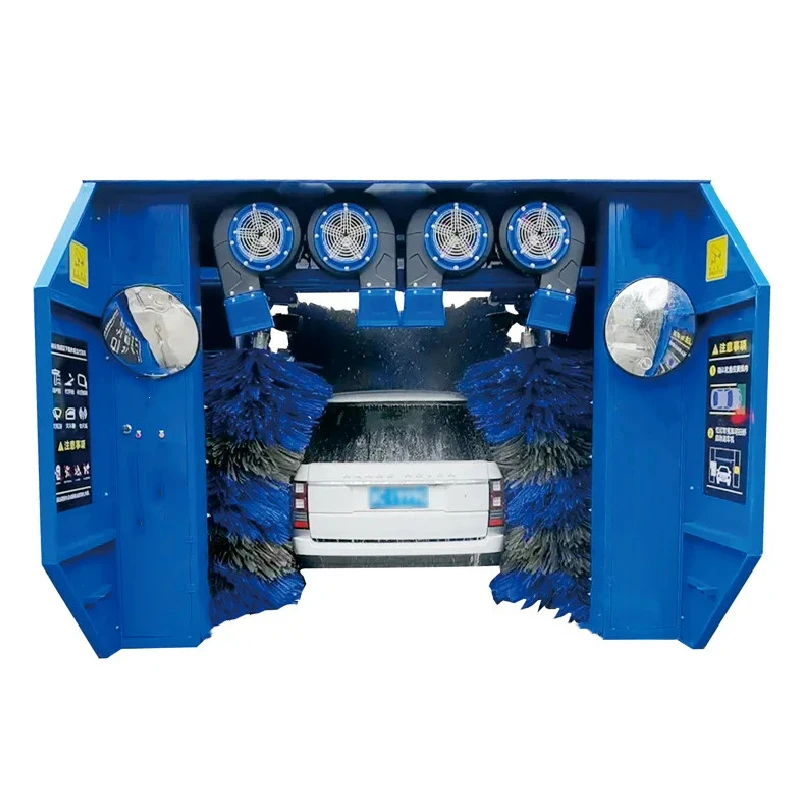
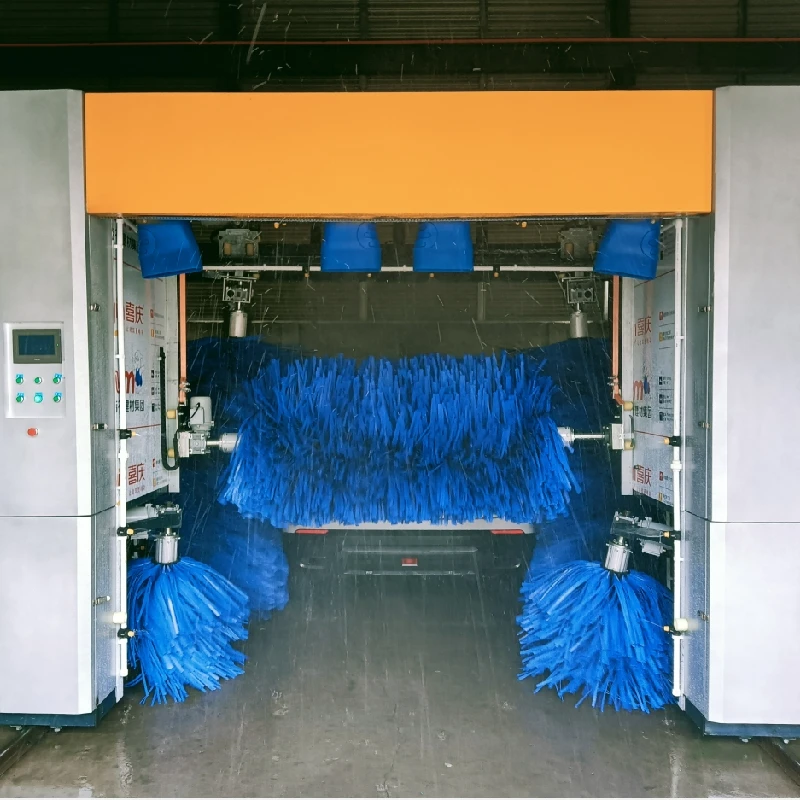
Inspect the brush configuration against the stated arrangement of one top, two large-arm, two arm, and four small brushes, including brush material, mounting, clearance, and replaceable wear parts.
Confirm that package labels, serial numbers, gross and net weights, packed dimensions, moisture protection, lifting marks, and the packing list match the equipment prepared for shipment.
Run a document cross-check between the final drawing, electrical schematic, process utility schedule, bill of materials, manuals, acceptance plan, and commercial quotation before releasing the purchase order.
The DYQC9 automatic car wash machine is a tunnel system for household cars with up to seven seats. Its stated wash dimensions are 5.4 m long, 2 m wide, and 2 m high. The machine itself measures 10 m by 3.8 m by 3 m, while the stated installation space is 11 m by 4 m by 3.2 m. These dimensions should drive the first site review before a bulk order is placed.
Confirm the application and site envelope
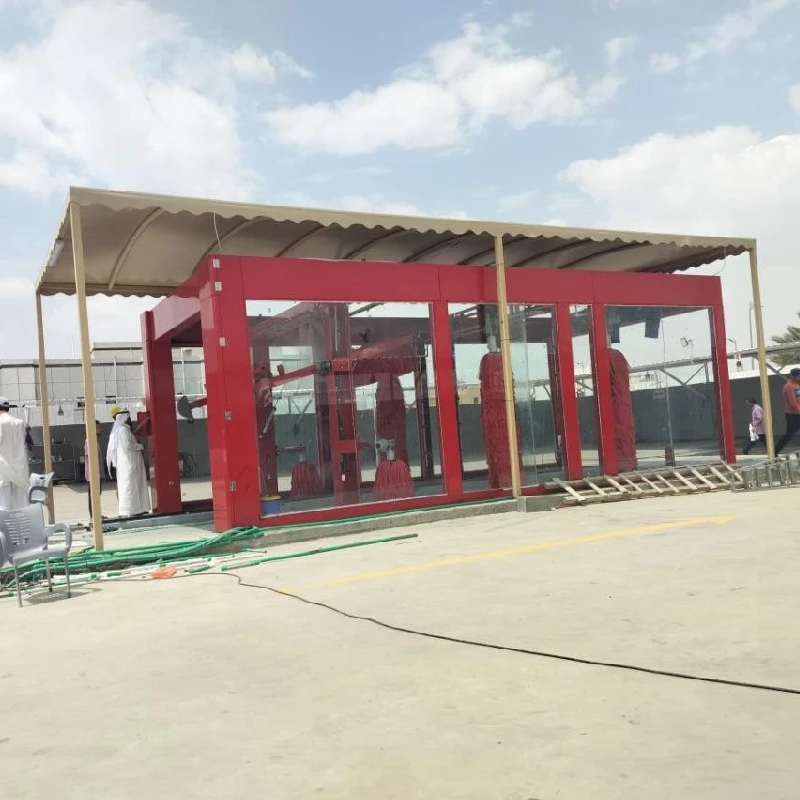
Measure the planned entry, tunnel, service, and exit areas against the machine and installation dimensions. A buyer should picture a vehicle entering the tunnel, passing through the brush and drying sections, and leaving without conflict with walls, drainage, electrical cabinets, or operator access. Check the full route for the equipment, including doors and handling space, not only the final foundation area.
The DYQC9 is intended for household cars up to seven seats. Ask the supplier to confirm how the stated vehicle range applies to the body styles in your operating fleet. Send representative vehicle length, width, height, wheelbase, and mirror details with the inquiry if your site will serve mixed models.
The system uses 28 kW and a 3-phase, 380 V, 50 Hz supply. Have the site electrician confirm that the planned supply and protection arrangement match the quotation. The stated air-pressure requirement is 0.8 MPa, so include the available air system details in the technical review.
Inspect the wash and control configuration
The wash process combines foam application, brushing, and air drying. The brush arrangement is one top brush, two large-arm brushes, two arm brushes, and four small brushes. Soft foam cotton brushes are described as providing 360-degree contouring, while infrared sensing adjusts brush distance and movement to vehicle dimensions. During sample review, inspect the brush material, mounting, movement, and clearance around mirrors, roof lines, and other vehicle surfaces.
The stated cycle time is 120 seconds per vehicle, and water consumption is 100 to 150 liters per wash. Ask the supplier how cycle time is defined, which stages it includes, and what operating conditions apply to the water figure. The drying system uses four high-power fans with a stated total of 22 kW. Request a process sequence showing foam, brush, rinse, and drying stages so the delivered configuration can be checked against the quotation.
The control system uses an Xinjie PLC and touch screen interface. The interface is described as supporting English and Chinese, with automatic and manual operating modes. Check the sample interface for start, stop, manual override, alarm, fault history, wash count, and access controls. Safety functions described for the system include emergency stop, overcurrent, overvoltage, undervoltage, and phase-loss protection. Confirm the location and operation of each function during inspection or factory acceptance.
For the product page, see the DYQC9 automatic car wash machine.
Set the order, packaging, and shipping questions
For a bulk inquiry, specify the number of complete systems, destination, vehicle mix, power standard, language for the HMI, and any requested accessories. Ask for the supplier's MOQ, production lead time, quote validity, payment terms, spare-parts arrangement, and installation or commissioning scope. These terms should appear in the commercial quotation and purchase contract, with the trigger for lead-time counting stated clearly.
Request the packed dimensions, gross and net weights, number of packages, lifting points, center-of-gravity markings where relevant, moisture protection, corrosion protection, and loading plan. Confirm whether galvanized frame sections, brushes, fans, sensors, control cabinets, rollers, piping, and loose accessories are packed separately. Match package numbers to the packing list before dispatch and again at receipt.
The buyer should also ask who is responsible for unloading, inland delivery, installation, electrical connection, commissioning, and damage claims. Photograph the packages at loading and arrival, including labels and visible damage, and keep the signed delivery record with the order file.
Request a complete document set
Ask the supplier to issue documents that allow engineering, receiving, installation, and maintenance teams to work from the same configuration:
- A final general arrangement drawing showing machine dimensions, installation space, vehicle clearance, service access, and connection points.
- An electrical schematic and power schedule covering the 28 kW system, 3-phase 380 V, 50 Hz supply, protection devices, control cabinet, PLC, sensors, and emergency circuits.
- A process and utility schedule covering the 120-second cycle, water consumption, 0.8 MPa air requirement, drying fans, drainage, and chemical connections.
- A bill of materials or component list identifying the frame, brushes, rollers, fans, sensors, PLC, switches, cabinets, and replaceable wear parts.
- Installation, operation, maintenance, troubleshooting, and spare-parts manuals in the agreed language.
- A factory inspection or acceptance-test plan with measurable checks for sensing, brush movement, conveying, drying, alarms, emergency stop, and electrical protection.
- A commercial invoice, packing list, shipping marks, and serial-number list for each system and package.
Evaluate the supplier before approval
Review whether the supplier can answer the technical and commercial questions with one consistent model configuration. Compare the quotation, drawings, bill of materials, packing list, manuals, and inspection plan line by line. Differences in dimensions, brush count, fan configuration, PLC, sensors, or protection functions should be resolved in writing before the purchase order is released.
Ask for a sample inspection or factory acceptance opportunity focused on vehicle sensing, automatic profiling, brush clearance, foam application, drying, manual operation, alarm behavior, and emergency shutdown. Record the result against the agreed acceptance plan. For a multi-unit order, confirm serial-number control, spare-parts identification, packaging consistency, and the process for reporting transit damage or commissioning issues.
Before requesting a final quotation from Xingtai Dingyuan Energy Saving Technology Development Co., Ltd., send the site layout, utility details, target vehicle list, quantity, destination, packaging requirements, language needs, and required delivery window. Ask the supplier to return the commercial terms and final configuration in one signed quotation.
The people

About the author
The company
Xingtai Dingyuan Energy Saving Technology Development Co., Ltd.
Is a professional manufacturer of automatic car washing equipment technology research and manufacturing, located in Xingtai City, the industrial capital of northern China. Our company's car washing machine production base has a workshop of over 3000 square meters, modern production workshops, and strong strength.…
About Us ↗Visit company website ↗Your next step
Ready to request a quotation?
Share quantity, specification, packaging and target delivery date so the supplier can answer precisely.
-
Where an automatic car wash machine fits across commercial vehicle cleaning sitesNewsNov.09,2026
-
How an Automatic Car Wash Machine Works: Structure, Process and Technical ChecksNewsNov.01,2026
-
Professional Car Wash with Machine for Efficient Business GrowthNewsJul.01,2026
-
Professional Car Wash Water Spray Machine for EfficiencyNewsJun.29,2026
-
Professional Car Wash Water Jet Machine for High EfficiencyNewsJun.27,2026