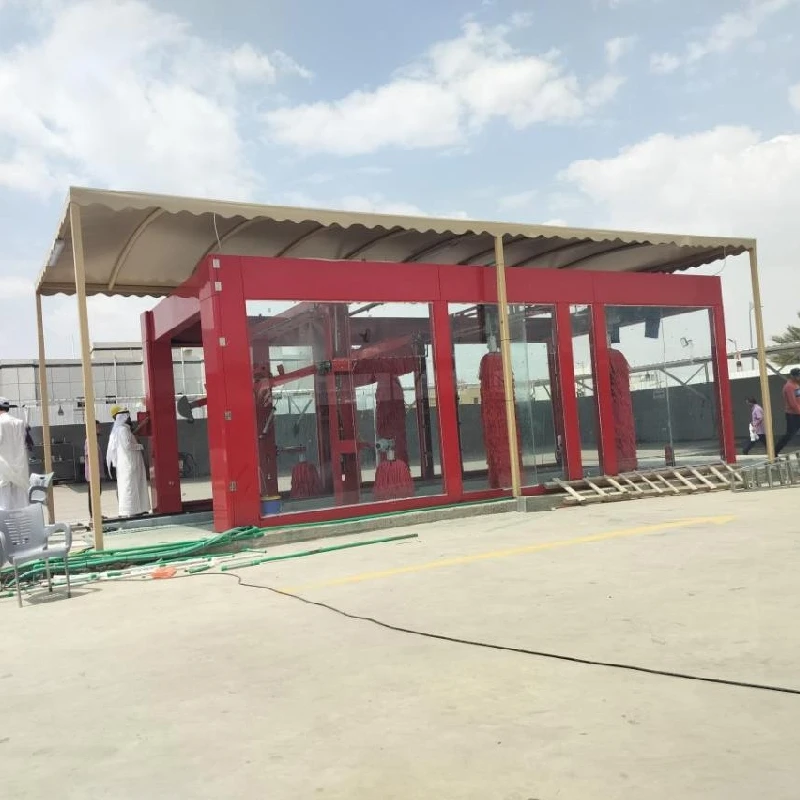
Commercial Automatic Car Pressure Washer Price and System Guide
Selecting an automated vehicle cleaning system requires a delicate balance between initial capital expenditure and long-term operational efficiency. For business owners in the car care sector, the investment is not merely about the hardware, but about maximizing throughput while minimizing vehicle damage and utility costs. Modern PLC-controlled systems have transformed the industry by introducing precision sensing technology that adapts to varying vehicle dimensions in real-time.
Our automatic car washing equipment is engineered to provide a seamless transition from manual labor to high-efficiency automation. By integrating advanced sensing arrays and high-power drying systems, these machines ensure a consistent, professional-grade finish for everything from compact minivans to larger vehicle types. Understanding the variables that influence the car pressure washer price and overall ROI is essential for any commercial venture looking to scale its cleaning operations without compromising on quality or vehicle safety.

Precision Engineering and Intelligent Vehicle Sensing Mechanisms
The core of a high-performance automatic car wash lies in its ability to interact safely with diverse vehicle geometries. Our equipment utilizes a sophisticated PLC (Programmable Logic Controller) system that manages the entire cleaning cycle. This intelligence allows the brushes to automatically sense the width of the car body, dynamically adjusting the distance to ensure a deep clean without risking any surface damage. This "human-machine dialogue" is facilitated via a bilingual touch screen interface (Chinese and English), providing operators with total control over automatic, manual, and remote functions.
Reliability is further bolstered by a comprehensive fault detection and alarm system. The machine can recognize vehicle appearance and troubleshoot errors in real-time, displayed directly on the interface. To ensure longevity, we source primary electronic components from globally recognized manufacturers, ensuring a low failure rate and stable performance even under heavy daily workloads. The structural integrity is maintained through galvanized steel, providing the necessary corrosion resistance required for wet environments.

Operational Workflow and Multi-Stage Cleaning Process
The cleaning cycle is designed for maximum efficiency, reducing the time each vehicle spends in the bay. The process begins with a high-pressure spray to loosen surface debris, followed by a specialized brush sequence. A single top brush handles the roof, while two skirt brushes clean the sides and tire hubs. Two large vertical brushes wrap around the front and rear sections, ensuring no blind spots are left untreated. The use of a water-wax cleaning solution not only removes stubborn grime but leaves a protective layer on the vehicle's paintwork.
Post-wash, the system employs four high-power fans that deliver a strong, focused airflow to dry the vehicle quickly. This eliminates the need for manual wiping, which often introduces micro-scratches. For those seeking a more compact footprint, our rolling car wash machines are ideal for small to medium investments. These units operate on a reciprocating principle where the machine moves while the car remains stationary, significantly reducing the required site space while maintaining a full cleaning spectrum.
Commercial Application and Site Integration Requirements
Implementing an automated wash system requires careful consideration of site logistics and utility infrastructure. Our standard equipment is designed for a site area of approximately 10,000mm by 42,000mm, with a height clearance of 3,200mm. This ensures ample room for vehicle entry, exit, and the movement of the reciprocating structures. With a processing speed of 20-25 vehicles per hour, the system is optimized for high-traffic locations such as petrol stations, dedicated car wash centers, and fleet management hubs.
From a utility perspective, the system operates on 380v power with a capacity of 6-22kw, depending on the active modules (such as the optional air drying system). Water consumption is kept efficient at 80-120L per vehicle, aligning with environmental conservation goals. The flexibility of our design allows for customization, enabling clients to add or remove functions—such as bottom washing—to match their specific market demand and budget constraints.
Technical Specifications and Component Configuration
| Component/Metric | Specification/Detail | Quantity/Value | Function/Material |
|---|---|---|---|
| Main Structure | Galvanized Steel | 1 Set | Corrosion-resistant frame |
| Cleaning Brushes | Top, Side, & Vertical | 5 Pieces | Imported non-scratch materials |
| Water/Foam System | High Pressure Injection | 1 Set | Dirt removal & wax protection |
| Operational Power | 380v / 100A | 6-22kw | Industrial electrical standard |
| Wash Efficiency | 20-25 vehicles/h | 80-120L/pcs | High throughput, low waste |
Evaluating Supplier Capability and Manufacturing Quality
When sourcing industrial cleaning equipment, the manufacturer's production capacity is a primary indicator of long-term support and quality consistency. Our production base in Xingtai City features a modern workshop exceeding 3,000 square meters, allowing for strict quality control over every weld and assembly. By focusing on independent research and development, we ensure that our machines are not just assembled from parts, but are engineered solutions tailored to specific customer needs.
Our commitment to energy saving and environmental protection is integrated into the design of every machine. We use pneumatic components imported from Europe and Japan to ensure precision and reduce maintenance costs. For international buyers, we provide full technical training and support factory inspections, ensuring that the transition from procurement to operation is seamless. This transparent manufacturing approach helps buyers verify the actual value behind the car pressure washer price they are quoted.
Future Trends in Vehicle Cleaning Automation
The vehicle cleaning industry is moving toward "smart" ecosystems where energy efficiency and water reclamation are paramount. We are currently focusing on further reducing the water-to-vehicle ratio while increasing cleaning power through improved nozzle technology and optimized foam application. The integration of remote monitoring via IoT will allow business owners to track vehicle counts and machine health from their smartphones, further reducing the need for on-site supervision.
Additionally, as vehicle designs become more diverse—with larger SUVs and specialized electric vehicle body styles—the adaptability of the sensing system becomes critical. Future iterations of our equipment will continue to refine the automatic vehicle appearance recognition system, ensuring that the "touchless" and "brush" options are optimized for different paint types and surface sensitivities, keeping the equipment relevant in a rapidly changing automotive market.
Frequently Asked Questions About Automated Car Wash Systems
How does the PLC system prevent damage to the car body?
The PLC system utilizes sensors to detect the vehicle's width and height in real-time, automatically adjusting the brush distance and pressure to ensure effective cleaning without applying excessive force to the vehicle surface.
What is the difference between a tunnel and a reciprocating car wash?
A tunnel system moves the car through various cleaning stations, suitable for extremely high volumes. A reciprocating (rolling) machine moves back and forth over a stationary car, requiring significantly less space and a smaller initial investment.
Is the air drying system mandatory for a commercial setup?
While optional, high-power air drying is highly recommended for commercial operations as it removes the need for manual labor, increases vehicle throughput, and prevents water spots on the vehicle paint.
What are the maintenance requirements for the brushes?
Our brushes are made from imported, high-durability materials designed to minimize wear. Regular inspection for debris and periodic lubrication of the moving structures are the primary requirements to ensure a long service life.
Can the machine be customized for specific vehicle types like buses?
Yes, we produce various models including specialized bus washing machines and custom automatic equipment tailored to the height and width requirements of commercial fleets.
What electrical requirements are needed for installation?
The standard configuration requires a 380v power supply with a 100A capacity. Power consumption typically ranges between 6kw and 22kw depending on the enabled modules and drying fans.
Technical Industry Resources
- ISO Standards for Industrial Machinery Safety
- International Energy Agency - Industrial Energy Efficiency
- EPA Guidelines for Commercial Water Usage
- IEEE Standards for PLC and Automation Control
Investing in professional automation is the most effective way to scale a car wash business while maintaining quality control. By choosing a manufacturer with a proven production base and a focus on energy-saving technology, operators can ensure a sustainable and profitable venture.
Industry Insights and Equipment Guides